2026-10-22 ·
How to Check for Spray Foam Problems in Scunthorpe Terraced Houses
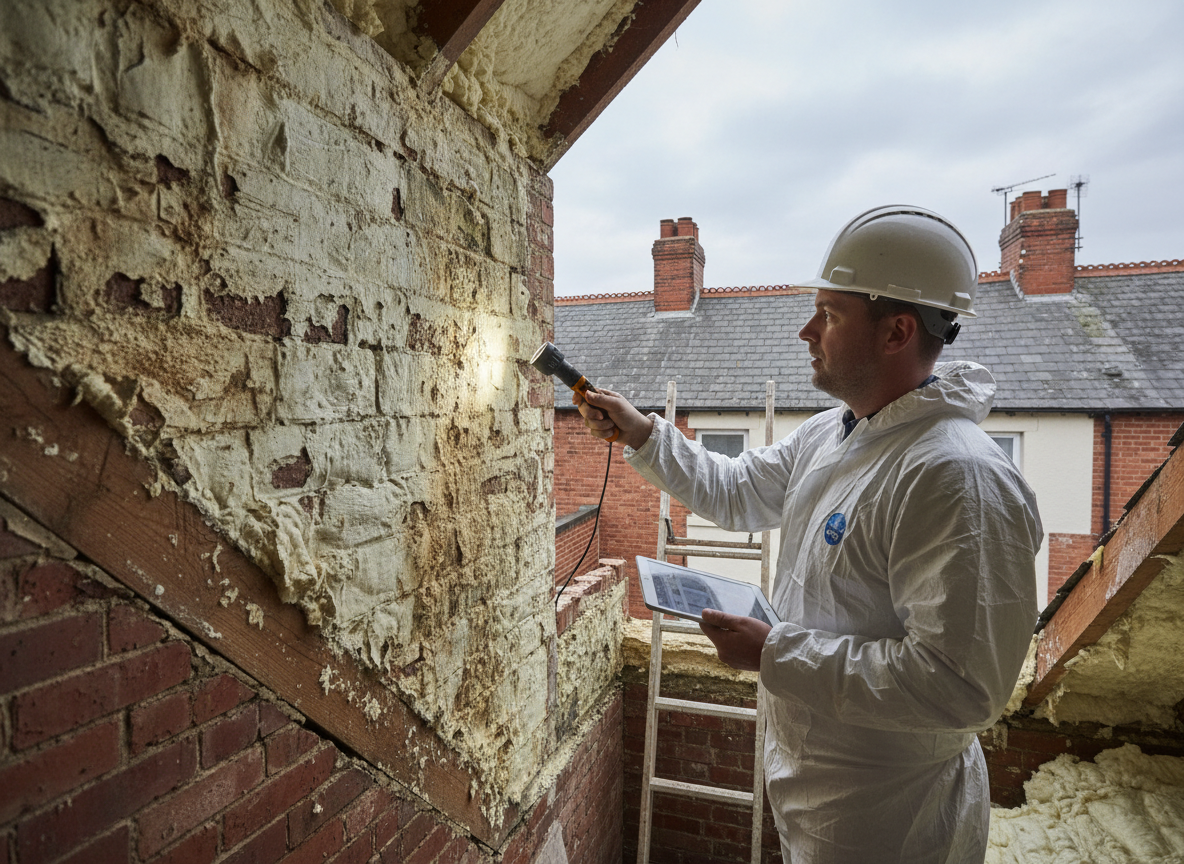
Inspecting Scunthorpe terraced houses for spray foam problems begins with a thorough loft examination for foam shrinkage, cracking, or water staining, which typically surfaces 5–10 years after installation in homes built between 1890 and 1930. These properties feature narrow roof voids with limited ventilation, allowing trapped moisture from the Humber estuary climate to accelerate foam breakdown. Owners should also note any musty odors or discolored ceiling plaster below the loft, as these indicate water penetration common in Scunthorpe's older terraces.
Initial Visual Checks in Terraced Lofts
Walk through the loft space during daylight and shine a torch along rafters to spot open-cell foam that has pulled away from timber or closed-cell layers showing bubbles. In Scunthorpe terraces, check the party wall junctions where foam often bridges neighboring properties and creates hidden damp paths. Look for rodent damage or bird droppings that have punctured the foam surface, a frequent occurrence in the area's industrial-era housing stock. Measure any gaps wider than 5 cm between foam and brickwork, as these allow cold air ingress during winter months. Document findings with dated photos for insurance or valuation records.
Signs of Moisture Damage Specific to Scunthorpe Homes
Scunthorpe's frequent rainfall and high humidity levels often push water through failing spray foam into joist ends, causing rot that weakens roof structures in terraced rows. Feel for soft timber around chimney stacks and check for rust on metal fixings where foam meets lead flashing. In many DN15 postcode terraces, condensation pools along the eaves because original slate roofs lack modern underlay, trapping vapor against the foam underside. Lift sections of foam carefully with a trowel to inspect the decking beneath for black mold streaks, which spread quickly in poorly ventilated voids typical of these homes.
Impact on Mortgage Valuations
Lenders routinely flag spray foam in Scunthorpe terraced houses during surveys, leading to valuation reductions when foam covers rafters or blocks ventilation. Review the Spray Foam Removal Scunthorpe and North Lincolnshire Council Rules article for local planning notes that affect older terraces. Note any sagging ceiling lines or uneven floorboards upstairs, signs that foam weight or moisture has stressed original joists. Properties near the steelworks or along Frodingham Road frequently face stricter checks because of their age and proximity to industrial pollution that speeds foam deterioration.
When to Arrange Professional Assessment
Schedule an insulation assessment once visual checks reveal more than three problem indicators, such as staining, gaps, or odors. A technician will use moisture meters and borescopes to map affected areas without full removal. Consider the When to Arrange Spray Foam Removal Before Selling a Scunthorpe Home guide if you plan to market the property. For urgent cases, contact the team at 95 High St, Scunthorpe DN15 6LY available 24/7 for same-day loft inspections. Early detection prevents larger repairs that could run into thousands when rot reaches load-bearing timbers.
Practical Next Steps After Checks
Compile your inspection notes and photos into a single folder before contacting removal specialists. Compare findings against the What Affects the Cost of Spray Foam Removal in North Lincolnshire post to understand variables like access difficulty in narrow terraces. If foam appears sound but ventilation is poor, focus first on adding ridge vents rather than immediate extraction. Re-inspect every six months during wet seasons to track any progression in moisture levels or foam adhesion.