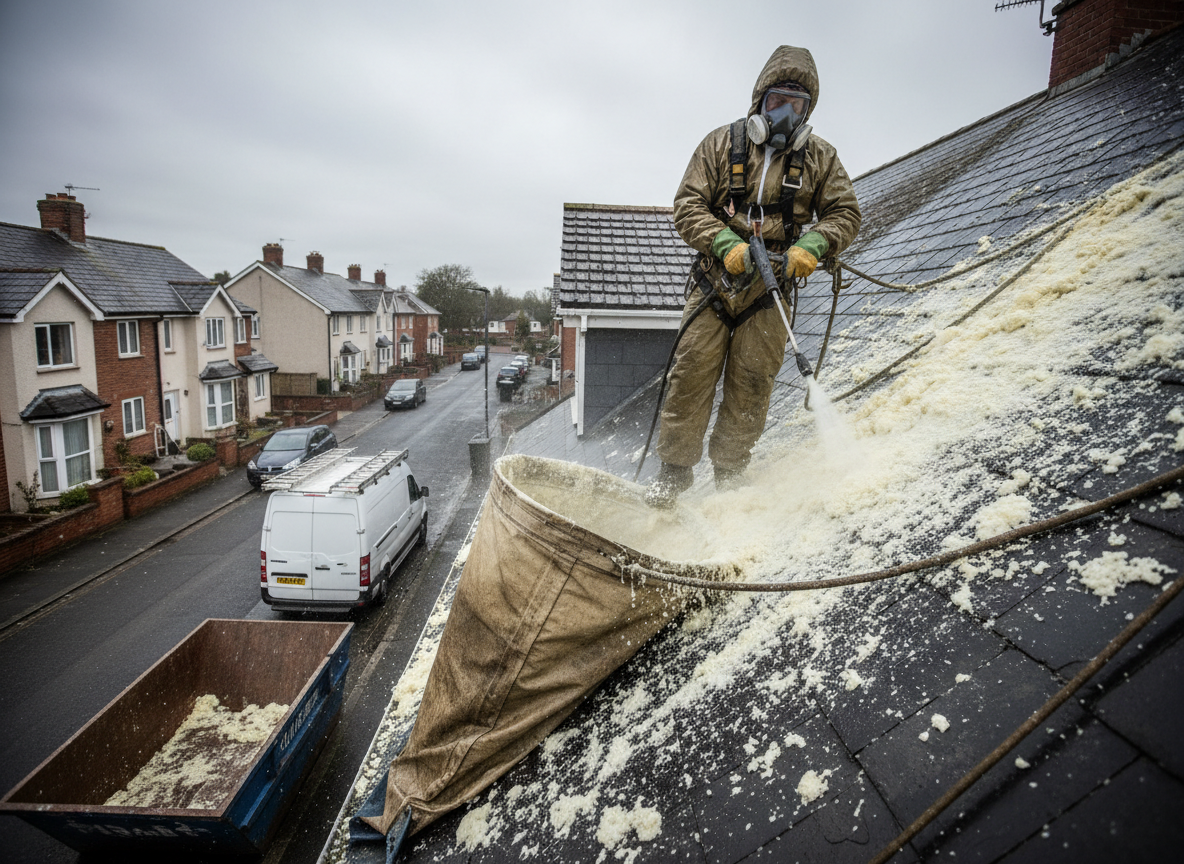
Roof spray foam removal in Scunthorpe often involves older terraced and semi-detached houses built during the town's steel industry expansion. These properties frequently have original slate roofs or timber rafters that were coated with closed-cell foam in the 1990s and early 2000s. Over time the foam traps condensation against the slates, accelerating rot in battens and felt, especially during the region's long, damp winters when rainfall is frequent and temperatures stay low.
The work requires careful mechanical scraping and vacuum extraction rather than solvents that could damage historic roof timbers common in neighbourhoods like Crosby and Frodingham. Crews must also check for asbestos in older underlays before disturbing the foam, a common find in post-war Scunthorpe housing stock. Ventilation improvements are usually needed after removal to prevent recurrence of the moisture problems that originally prompted the foam installation.
Edge cases include vaulted ceilings in converted lofts where foam has bridged into wall cavities, and properties near the steelworks where industrial dust has settled into the foam surface, making clean separation harder. All debris is bagged on site and removed the same day to avoid contamination of gardens or neighbouring properties in the tight terraced streets.
Homeowners are advised to inspect for sagging ceilings or musty smells in upstairs rooms before booking, as these signs indicate the foam has already compromised the roof deck. Work is carried out from both inside the loft and externally where necessary, with temporary weather protection maintained throughout.
Technician insight
In Scunthorpe, the thing that catches most people out with roof spray foam removal is the older terraced stock around Crosby and Ashby where foam was sprayed straight onto slate without a vapour barrier. Once winter rain sets in, the trapped moisture rots the battens from the inside long before any ceiling staining shows up.
Hidden Rot in a Frodingham Terrace
Homeowner noticed musty smell in the loft of a 1930s terraced house. Inspection found closed-cell foam bridging the original slates and felt, with widespread batten decay. Foam was mechanically stripped and vacuumed out over two days, damaged timbers isolated for later repair, and extra roof vents added to restore airflow.
How it works
- 1
Initial Loft Inspection
Assess foam depth, roof condition, and any signs of rot or asbestos in Scunthorpe properties.
- 2
Safe Foam Extraction
Mechanical removal and vacuum extraction of spray foam while protecting original slates and timbers.
- 3
Debris Clearance and Disposal
Bagging and removal of all waste from the property with same-day haul away.
- 4
Ventilation and Protection Review
Advice on restoring airflow and preventing future moisture issues in the roof space.
Pricing
Cost depends on roof size, foam thickness, and access difficulty in Scunthorpe terraced homes.