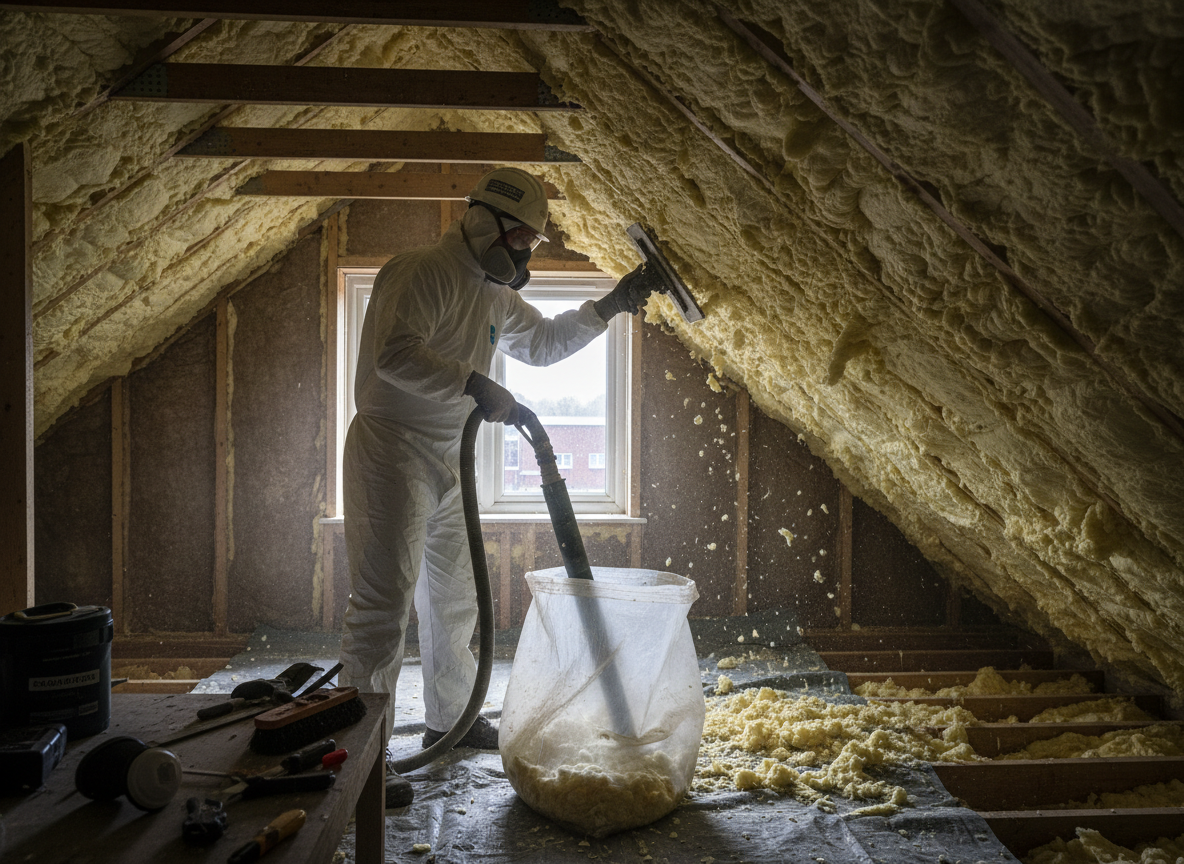
Mortgage lenders in the Scunthorpe area routinely reject properties where closed-cell spray foam has been applied directly to rafters in lofts of 1930s to 1970s terraced and semi-detached houses common around Crosby and Ashby. The foam traps moisture against timber in Lincolnshire’s damp winters, leading to hidden rot that only appears during valuation surveys. Removal requires careful cutting back without damaging felt or battens, followed by ventilation upgrades that meet current building standards so the property can be re-inspected and approved for lending.
Homeowners near the High Street and Frodingham often discover the issue only after an offer is accepted and the lender’s valuer flags the foam. We work to the specific requirements of major high-street lenders by documenting every stage of removal with photos and providing a clear post-removal report. This avoids the common problem of partial clearance that still leaves lenders refusing to proceed on Scunthorpe properties.
The region’s older housing stock combined with heavy winter rainfall means foam installed ten or fifteen years ago frequently conceals water ingress points along the roofline. Proper removal includes checking for and treating any affected timber before re-boarding, ensuring the loft meets lender expectations for a mortgageable condition.
Common Mortgage Lender Concerns
Lenders focus on whether foam has compromised roof ventilation or caused structural timber decay. We address both by restoring airflow and replacing damaged sections where needed, giving surveyors the evidence they require.
Technician insight
In Scunthorpe, the thing that catches most people out with mortgage lender spray foam removal is the 1950s semis around Ashby where foam was sprayed right up to the eaves, trapping condensation against the brickwork that only shows once the foam is stripped back in winter.
Crosby Terrace Mortgage Block
A 1960s mid-terrace in Crosby failed its mortgage survey because closed-cell foam covered the entire loft. We removed the foam, found two rotted rafter ends from trapped moisture, treated the timber and added ridge vents. The valuer re-inspected and cleared the property for lending within ten days.
How it works
- 1
Initial Loft Survey
We inspect the spray foam application, note rafter condition and ventilation gaps, and confirm the exact lender requirements for the property in Scunthorpe.
- 2
Safe Foam Removal
Foam is cut away in sections to avoid disturbing felt or wiring, with debris bagged and removed from site the same day.
- 3
Timber and Ventilation Check
Any affected timber is treated or replaced, and roof vents are cleared or added to restore proper airflow demanded by mortgage valuers.
- 4
Documentation and Handover
Photographic records and a written summary are supplied for the lender’s files so the mortgage process can continue without delay.
Pricing
Pricing depends on loft size, depth of foam, and any timber repairs required; upfront quotes given after the survey.