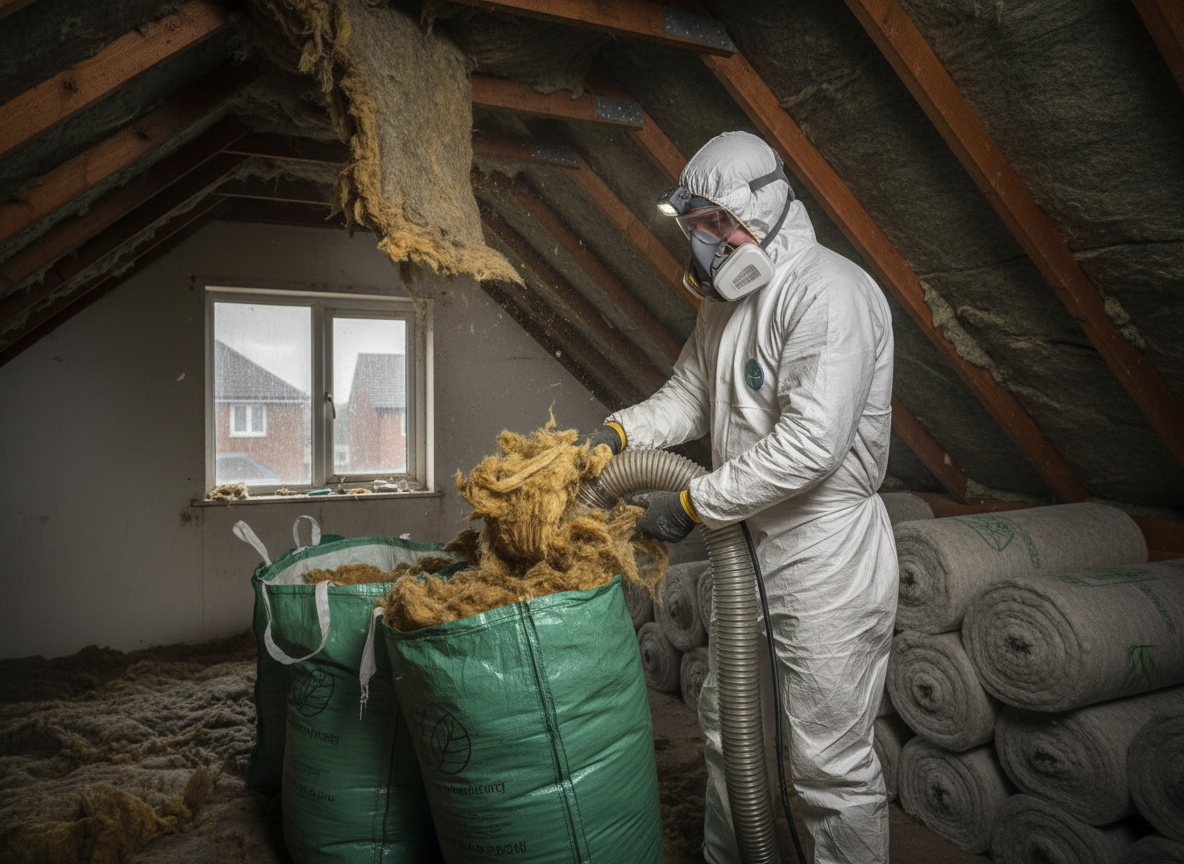
Scunthorpe homes, particularly those built between the 1960s and 1980s in areas like Crosby and Frodingham, often contain closed-cell spray foam applied directly to roof voids or under floorboards. Removing it without damaging original timber or plaster requires controlled mechanical extraction combined with HEPA filtration to capture particulates before they settle into living spaces. Lincolnshire's frequent damp winters can leave residual moisture trapped behind the foam, so each job starts with moisture mapping to prevent hidden rot from spreading once the material is gone.
Environmentally friendly removal avoids chemical solvents and instead uses mechanical separation followed by bagging for licensed recycling streams. In older terraced properties near the town centre, foam sometimes bonds to asbestos-containing artex ceilings, demanding extra containment steps and licensed waste handling. Homeowners in Scunthorpe frequently discover that standard loft insulation upgrades become impossible until the foam is fully cleared, because building control now requires breathable materials in many renovation projects.
The process also accounts for the local soil conditions around Scunthorpe where clay-heavy ground can channel water toward foundations; any foam that has wicked moisture from below must be cut back carefully to avoid creating new damp bridges. Crews work from the address at 95 High St and can respond at any hour because cold snaps often prompt urgent calls when homeowners notice condensation issues worsening overnight.
Technician insight
In Scunthorpe, the thing that catches most people out with environmentally friendly insulation removal is how 1970s semis in the Crosby area often have foam sprayed straight onto the original lath and plaster; once you start pulling it, the plaster can crumble if you do not support it from below first.
Foam Removal in a Frodingham Terrace
Homeowner noticed persistent condensation in the master bedroom of a 1960s terrace. Inspection revealed closed-cell foam trapping moisture against the external wall. Crew removed the foam in sections, supported the ceiling, and extracted damp material without disturbing the original plaster. Voids were left clean and dry, allowing the owner to install breathable insulation later.
How it works
- 1
Initial Inspection
Survey the property in Scunthorpe to map foam depth, substrate condition and any moisture pockets before work begins.
- 2
Containment Setup
Seal rooms and install negative air filtration to keep dust from migrating into living areas during extraction.
- 3
Mechanical Removal
Use low-vibration tools to separate foam from timber and plaster without causing structural damage.
- 4
Waste Segregation and Disposal
Bag material on site for transport to licensed recycling facilities rather than landfill.
- 5
Final Verification
Check voids for remaining residue and confirm substrate is dry before handing back to the homeowner.
Pricing
Upfront quotes provided after inspection; cost depends on access, foam thickness and disposal volume.