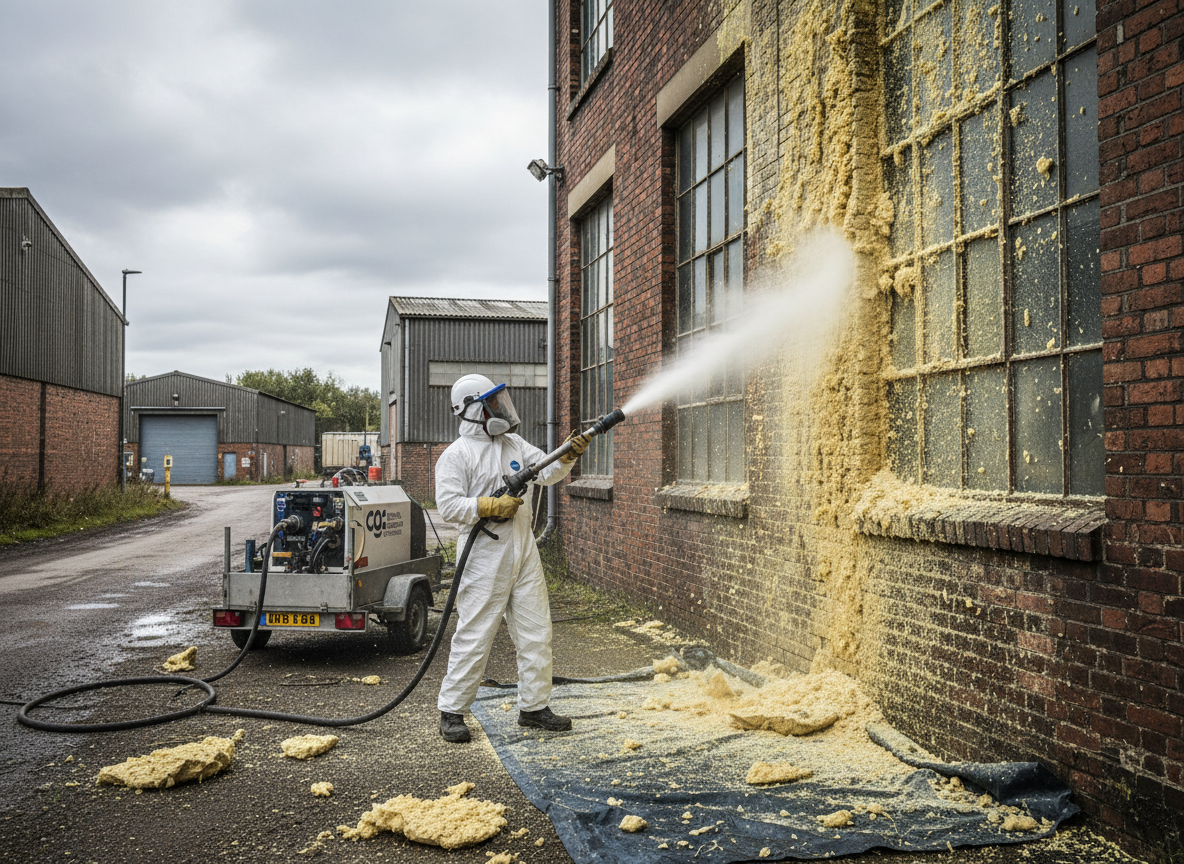
Dry ice blasting removes spray foam insulation by propelling solid CO2 pellets that sublimate on contact, lifting foam without scraping or chemicals that could damage underlying timber or brick. In Scunthorpe’s older terraced homes and post-war estates, foam often bonds to lath and plaster or cavity walls exposed to persistent damp from the region’s flat terrain and high water table. The process leaves no residue and works in confined roof spaces where traditional mechanical removal risks structural disturbance.
Edge cases include foam installed over electrical cabling or around chimney breasts common in Scunthorpe’s Victorian and 1950s stock. Blasting pressure must be calibrated to avoid dislodging mortar in older brickwork while still clearing the full depth of foam. Lincolnshire Building Regulations require verification that ventilation remains adequate after removal, particularly in properties near the River Trent where condensation issues recur in colder months.
Homeowners sometimes discover hidden foam layers applied during past energy upgrades, especially in semis around Ashby or the Crosby area. Dry ice blasting reaches these layers without opening walls, but operators must monitor substrate temperature to prevent thermal shock on metal fixings. The method also reduces dust compared with mechanical stripping, an advantage in occupied homes where residents remain during phased work.
Seasonal Considerations
Winter calls in Scunthorpe often involve foam that has absorbed moisture from condensation, requiring slower pass speeds to prevent ice bridging. Summer jobs benefit from lower humidity but may need extra ventilation checks once the foam is gone.
Technician insight
In Scunthorpe, the thing that catches most people out with dry ice blasting spray foam removal is how the older brick terraces around Frodingham and the flat terrain near the Trent hold moisture that makes foam grip tighter than expected. Homeowners often underestimate how much extra time the saturated layers need without risking the mortar joints.
Crosby Terrace Foam Extraction
Foam in a 1950s semi had trapped condensation against the gable wall. Inspection showed full-depth adhesion plus hidden sections around the chimney. Dry ice blasting cleared both layers in controlled passes, leaving the brick and timber intact. The owner reported drier conditions in the loft the following winter.
How it works
- 1
Site Assessment
Inspect roof voids, cavities and substrate condition in the Scunthorpe property to map foam depth and any hidden services.
- 2
Protection Setup
Seal adjacent rooms and install extraction to contain CO2 and loosened debris before blasting begins.
- 3
Dry Ice Blasting
Apply calibrated CO2 pellets section by section, working from the highest point downward to clear foam completely.
- 4
Final Clearance and Check
Remove all residue, inspect substrate integrity and confirm ventilation paths remain clear per local standards.
Pricing
Cost depends on property size, foam thickness and access difficulty; upfront quotes provided after inspection.